Health & Safety
Protecting yourself and others.
Health & Safety Guidelines
Take care of yourself and others:
If you are feeling unwell, have cold/flu/COVID-19 symptoms or another airborne illness, please hold off on signing up for deliveries until you have recovered and are no longer contagious.
Some members of our community, including both riders and delivery recipients, may be immunocompromised or at higher risk of health complications if they get sick. We care for each other.
For more info, see our Code of Conduct and Anti-oppression Framework.
Measures you can take to prevent transmission:
Wear a mask at pick-up and drop-off and when handling goods.
Wear a mask when entering buildings or meeting with people indoors.
Wash hands or use hand sanitizers before and after completing your delivery.
Maintain distance (2 meters / 6 feet) whenever possible.
Do not crowd pick-up areas.
If you feel uncomfortable or unsafe at any time, stay calm and contact the Bike Brigade team. We are here for you!
Bike Safety
Always ride safe & know your rights.
We encourage the safety and security of our members at all times to avoid being targeted by police or impacted by road violence. Follow bicycle safety and road rules and take any reasonable precautions to keep yourself and others safe, like wearing a helmet, having a bell and lights, and making sure your bike is in safe working condition. Obey the rules of the road and never rush for a delivery. Your safety takes priority over time of delivery at all times. We know that cyclists are subjected to targeted ticketing campaigns by the police and inequitable enforcement of the rules of the road. We also know that some riders may be subject to racial profiling and anti-immigrant bias on top of anti-cycling bias.
We strongly recommend you familiarize yourself with the neighbourhood you are delivering in to ensure your individual safety. If you need support from the Bike Brigade during deliveries, text dispatch. We respond to non-emergency situations, from getting a flat tire to needing a buddy to feel safe riding home. This is not an emergency messaging line. Please use appropriate emergency services according to the situation and your needs. For non-emergency community alternatives to police, contact 211 for community-led organizations providing social services like food, housing, mental health, and Black/Indigenous focused programs. People experiencing or witnessing a mental health crisis can ask for Toronto Community Crisis Service (TCCS), a community-based, client-centred, trauma-informed response to non-emergency crisis calls and wellness checks.
You can also report a non-emergency incident or request support from us by filing an incident report. To provide general feedback, suggestions or ask questions, use our general feedback form.
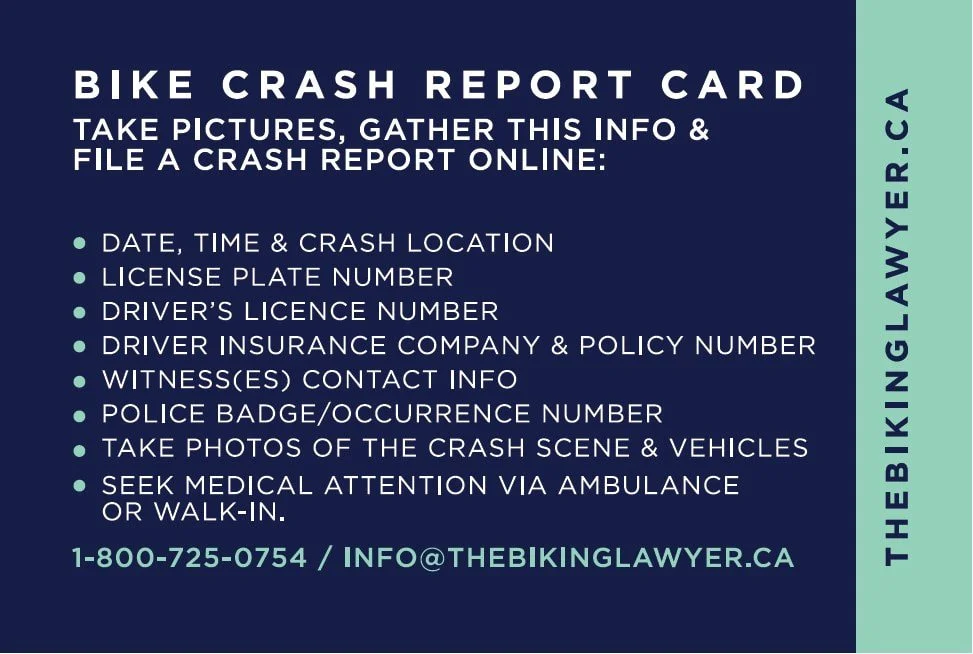
What to do in a crash:
Whenever you are on your bike, be sure that you are safe and know what to do if you are hurt, injured, or in a crash.
*This information has been researched and provided by lawyer and bike brigade rider/organizer Dave Shellnutt, the Biking Lawyer.